A federal charge isn’t just a more serious version of a state charge — it’s a different legal system, with different agencies building the case, a different court hearing it, and a different set of rules governing what happens after conviction. If you’re used to thinking about “criminal charges” in the state-court sense, several of those assumptions don’t carry over.
Florida Has Three Separate Federal Districts
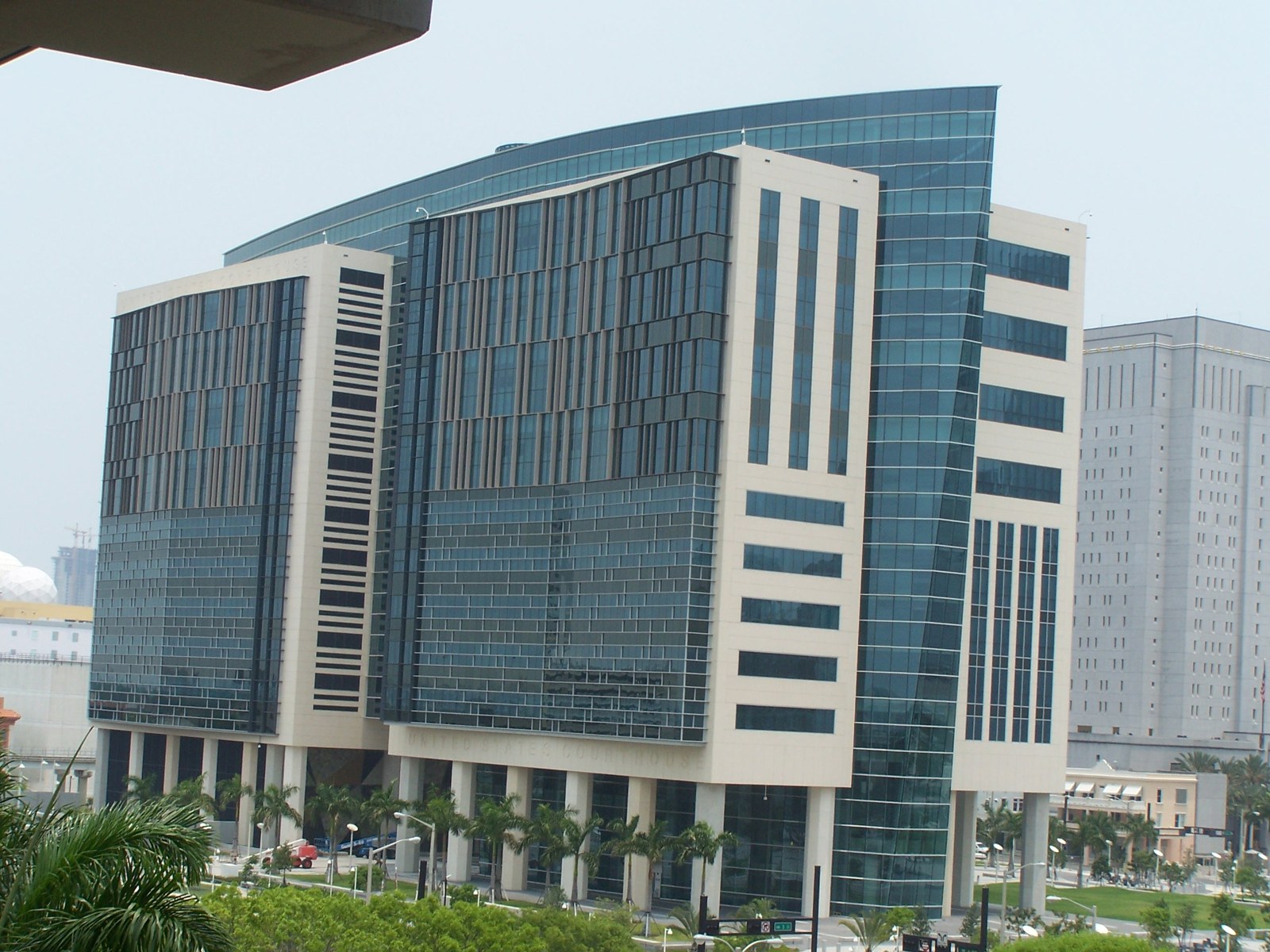
Florida is divided into three federal judicial districts, each with its own U.S. District Court and its own U.S. Attorney’s Office prosecuting cases within it. The Northern District covers 23 counties in the Panhandle and Big Bend region, with courts in Tallahassee, Gainesville, Marianna, Panama City, and Pensacola. The Middle District is the largest by county count — 36 counties including Hillsborough, Pinellas, Orange, and Duval — with courts in Tampa, Orlando, Jacksonville, Fort Myers, Ocala, St. Petersburg, Fernandina, and Live Oak. The Southern District covers Miami-Dade, Broward, Palm Beach, Monroe, and five other counties, with courts in Miami, Fort Lauderdale, Fort Pierce, Key West, and West Palm Beach.
Which district a case falls in isn’t just geography — it determines which U.S. Attorney’s Office is prosecuting, which judges are assigned, and which district’s local rules and practices apply.
Different Agencies, Different Authority
State charges are typically built by local police or the Florida Highway Patrol and prosecuted by a State Attorney’s Office. Federal charges are built by federal agencies — the FBI, which has broad investigative jurisdiction across federal crime generally, and the DEA, which focuses specifically on drug-related violations, along with other agencies like the ATF and IRS Criminal Investigation depending on the offense. These cases are prosecuted by Assistant U.S. Attorneys out of one of the three district offices above, not by county-level prosecutors. The charges themselves come from federal statutes (Title 18 of the U.S. Code and others) rather than Florida Statutes, and they’re heard in U.S. District Court, not Florida circuit or county court.
Federal Sentencing Works on a Different System Entirely
Florida state sentencing is governed by Florida’s own statutory ranges. Federal sentencing runs through the U.S. Sentencing Guidelines, a matrix system published by the U.S. Sentencing Commission that combines a numeric “offense level” for the crime with the defendant’s criminal history category to produce a recommended sentencing range in months. As an example of how the matrix works: an offense level of 15 combined with Criminal History Category III produces a guideline range of 24 to 30 months — the specific range moves based on both variables independently.
Layered on top of the guidelines, many federal offenses carry statutory mandatory minimum sentences set by Congress, which the judge cannot go below regardless of what the guideline range would otherwise suggest. According to the U.S. Sentencing Commission’s most recent full-year data (FY2025), about 21% of all federal cases involved a charge carrying a mandatory minimum, and drug trafficking offenses accounted for 68% of those cases — by far the largest category, followed by sexual abuse offenses (8%), child pornography offenses (7%), and firearms offenses (5%). Two mechanisms can relieve a defendant of an otherwise-applicable mandatory minimum: the statutory “safety valve” provision for certain low-level, non-violent offenders, and a motion for a below-mandatory-minimum sentence based on substantial assistance to the government. Between the two, the Sentencing Commission’s data shows roughly a third of defendants who would otherwise face a mandatory minimum are relieved of it through one of those routes.
There Is No Federal Parole
This is one of the most significant practical differences from the state system, and it’s frequently misunderstood. Since the Sentencing Reform Act took effect for offenses committed on or after November 1, 1987, federal parole no longer exists. A federal sentence, once imposed, is essentially the sentence that will be served, with one narrow mechanism for reducing it: good conduct time. Under 18 U.S.C. § 3624, federal inmates can earn up to 54 days of credit per year for good behavior — which, at the maximum, still means serving roughly 85% of the imposed sentence, not a fraction of it the way parole once allowed.
Federal Cases Overwhelmingly End in a Plea, Not a Trial
According to the Sentencing Commission’s own 2024 Annual Report, over 97% of federal defendants who were convicted resolved their case through a guilty plea rather than a trial. Trial is genuinely rare in federal court — and it isn’t a neutral choice. A defendant who pleads guilty typically receives a 2- to 3-level reduction under the sentencing guidelines for acceptance of responsibility, a reduction that isn’t available after a trial conviction. Federal plea agreements typically require waiving several rights as part of the deal: the right to a jury trial, the right to appeal a sentence that falls within an agreed range, and, in most agreements, a broad waiver of the right to later challenge the conviction or sentence except on narrow grounds like ineffective assistance of counsel.
None of this means a plea is automatically the right call in any specific case — it means the decision carries real, quantifiable tradeoffs that are different from a state case, and it’s worth understanding those tradeoffs specifically rather than assuming federal and state process work the same way.